Pages

Showing posts with label sport cars. Show all posts

New Vauxhall VXR8 revealed

Vauxhall is promising improvements to refinement and performance with the next-generation VXR8, revealed this week ahead of its arrival in UK dealers next March.

The Holden Special Vehicles-built super-saloon now takes the Aussie firm’s GTS model as its base, instead of the more lowly Clubsport R8 that was used for the first VXR8.

See the official pics of the new Vauxhall VXR8 :


So while Vauxhall’s flagship will retain 6.2-litre Chevrolet V8 power (now 425bhp, with 406lb ft) — enough for a 0-60mph time of 4.9sec and a governed top speed of 155mph — its spec sheet will now include more advanced suspension technology, a revised interior with HSV Performance seats, and launch control.

The new VXR8 continues with the old car’s MacPherson strut/multi-link suspension layout, and offers a mechanical limited-slip differential, but adds Magnetic Ride Control, which adapts the car’s set-up up to 1000 times per second. The exterior styling follows the GTS’s looks closely, with a new grille, LED daytime running lights, LED tail-lights and a rear spoiler.

Read Autocar's first drive of the HSV Commodore GTS E2

As well as the new seats, the cabin gets full leather trim as standard, a new instrument cluster and switchgear, plus an Enhanced Driver Interface to connect with the on-board computer, providing data such as g-forces, power, torque and lap times. Vauxhall will also offer MOTEC sofware for owners to download the data for further analysis.

Offered with a choice of a six-speed manual or automatic transmission, the VRX8 will be sold in seven specialised Vauxhall dealers (but 34 outlets can service it). It’ll cost from £49,500 (including 20 per cent VAT), more than £20k less than a Mercedes E63 AMG

Land Rover Freelander 2.2 eD4 150 HSE 2WD

What is it?
This is the new two-wheel drive Land Rover Freelander eD4. Under pressure to meet the demand for cleaner, Euro-5 compliant cars, the famous 4x4 marque has had to think the unthinkable and develop a two-wheel drive powertrain for its compact SUV.

Despite Land Rover’s all-wheel drive heritage it’s important for Land Rover to compete in the ever-increasing two-wheel drive SUV market. So, with no heavy AWD system and an improved stop-start and more efficient 2.2-litre engine the new eD4 manages to gets its CO2 figure down to a respectable 158g/km and 47.2mpg.

See the test pics of the Land Rover Freelander eD4


What’s it like?
The big question for fans of the marque is does it still merit a Land Rover badge (which incidentally is now circled in silver rather than gold) on the front? At the Land Rover Experience off-road driving course at Les Comes, Barcelona, I drove both this new front-wheel drive Freelander back to back with the latest 187bhp SD4 HSE auto all-wheel drive model.

This is the top-spec car (beneath this model sit the less powerful TD4 and eD4) and equipped with its Terrain Response and Hill Descent Control tackled terrain such as rocky and uneven tracks, steep inclines, ruts, ditches, extreme ascents and descents with aplomb, as you would expect from one of the most capable 4x4s on the market.

Then it was time to hit the rough stuff in the most fuel-efficient car that Land Rover has ever made. Admittedly the 2WD SUV needed much more coaxing, and occasionally it lost traction, but the lighter car still has an abundant 310lb ft (15lb ft more than the outgoing model) of torque, all of which helped the front-wheel drive car even plough through the water obstacle without missing a beat. The eD4 is still very much a Land Rover and has the same underbody protection, sump guard and great ground clearance as the 4WD model.

Of course, for the vast majority of buyers in the compact SUV market, such information is of little interest, as few cars ever make it that far off tarmac. Of more importance will be that the new eD4 manages 47.2mpg and only emits 158g/km of CO2.

The Freelander’s improved stop-start system helps contribute to this figure, and thanks to a bi-directional crank sensor and trigger wheel the system is able to establish the crankshaft position quicker, helping the car’s engine fire-up with 30 per cent better efficiency.

On the outside changes to the 2011 are pretty subtle. A new front bumper assembly gives the car a more planted look, and there’s a new front grille, too, which is available in either a dark or light finish. Headlamps are improved while the rear lights have a clear inner lens.

Inside not much has changed, there’s some new fascia finishes which help improve the cabin’s premium feel, but there’s still an expanse of hard plastics and much of the switchgear has a utilitarian feel to it.

On the road, the new engine’s Improved economy hasn’t affected performance, though, as the entry-level engine’s 0-60mph time remains at 10.9 seconds and on our short test drive the front-drive car handled and rode well on the Spanish roads. Steering was accurate and well balanced, but it still feels noisy at motorway speeds and its grip doesn’t seem diminished by only having front-wheel power; at lower speeds the 2WD seemed quicker to turn in.

Should I buy one?
Times are changing, Minis are no longer mini and come with all-wheel drive, while Land Rovers are fuel efficient but with only two-wheel power. It’s a confusing market place, and the new Freelander has lots of rivals.

An HSE trim eD4 will mean it has to compete with the X3, but BMW manages to make its all-wheel drive xDrive20d SE produce less CO2 and perform better at the pumps than the 2WD Land Rover.

A more entry-level Freelander has it competing with a 2WD Ford Kuga, or even the well-equipped and budget-priced Kia Sportage. But for some buyers it’s the Land Rover badge that they want on the front of their SUV, and in the eD4 the marque’s engineers still have an off-road car they can be proud of.


Land Rover Freelander 2.2 eD4 150 HSE 2WD
Price: from £22,000; Top speed: 112mph; 0-62mph: 10.9sec; Economy: 47.2mpg; CO2: 158g/km; Kerb weight: 1710kg; Engine type: 4 cyls, 2179cc , turbodiesel; Power: 148bhp; Torque: 310lb ft; Gearbox: 6-spd manual

Mazda 2 1.5 TS2

The mid-life facelift of the Mazda 2

Some subtle tweaks to the exterior styling

In everyday use the auto gearbox is more than adequate

It has one of the best blends of ride comort and body control in the segment

The 101bhp 1.5-litre petrol motor comes complete with a four-speed auto

Changes to the interior add appeal, and it is no bad thing that the 2 looks pretty much as it did

The 2 offers adequate space in the back

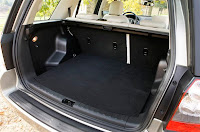
Adequate space again in the boot

Mazda 2 1.5 TS2 Activematic 5dr
Price: £12,060; Top speed: 105mph; 0-62mph: 11.9sec; Economy: 44.8mpg; CO2: 146g/km; Kerb weight: 980kg; Engine type: 4cyl in line, 1498cc, petrol; Power: 101bhp at 6000rpm; Torque: 98lb ft at 4000rpm; Gearbox: 4-spd auto

Land Rover Range Rover 4.4 TDV8

The Range Rover celebrated its 40th birthday this year, nine of which have been clocked up by the current iteration. Much has changed since our original road test of it in 2002, and with the latest ‘2011 model year’ updates to the interior and powertrain, we thought it worth revisiting.

The big news is a new 4.4-litre V8 diesel engine, which replaces the 3.6-litre TDV8 and promises a 15 per cent increase in power and 19 per cent reduction in fuel consumption. This is mated to a ZF-sourced eight-speed torque converter automatic, which retains both low and high ratios.

Land Rover continues to improve the Range Rover’s already sumptuous cabin. In 2010 it gained hi-tech multi-function TFT dials (similar to those now used in the Jaguar XJ) and, mindful of the chauffeuring needs of emerging markets, Land Rover added reclining rear seats.

After 40 years, the biggest threat facing the Range Rover comes not from a rival car, but from social acceptance and environmental pressures. Does a new engine go far enough to keep it relevant?

Mazda MX- 5 Superlight

Mazda plans to make much greater use of its Nagare design language on the lighter next-generation MX-5, due in 2012.

Mazda has been undergoing a ground-up rethink of its sports car strategy after concerns that the current MX-5 has become too heavy to stay true to the original car’s ethos.

See Autocar's rendering of the new Mazda MX-5

The new model is seen as ideal candidate for the Nagare design language, which is inspired by nature — in particular, wind and flowing water — and produced five highly rated concepts in 2006 and 2007.

Nagare will not feature on any future Mazda concept cars (the firm will reveal a new design direction in the autumn) but it will still make it on to the firm’s upcoming production cars, including the newly launched 5.

The decision to apply it to that car was hotly contested inside the firm, because many felt the tall, slab-sided MPV was unworthy of the treatment.

Employing Nagare’s side panel creases should prove a more straightforward process on the MX-5 sports car.

Read Autocar's first drive of the Mazda MX-5 Superlight concept

The original MX-5 had a target weight of 1000kg during development, and Mazda has set itself the same goal for the new model. It is still evaluating engine options, but it’s almost certain to be one of the first models to get the firm’s Sky-G range of petrol motors; 1.6 and 1.8-litre variants are under consideration.

The chosen powerplant will be mated to a six-speed manual as standard. Mazda’s forthcoming dual-clutch unit — due on the 3 next year — is likely to be an option.

The Focus RS WRC 08

Focus RS WRC 08

Focus RS WRC 08

The Focus RS WRC 08 is based on the 2007 model, Ford Focus WRC 08 seen here for the first time with its new front aero design at the Rallye Deutschland 2008 Shakedown. This is the first time Hirvonen and Latvala have driven the 08 car with the new front styling.

The 2008 version of the Focus RS WRC includes design style changes as well as engine improvements. Style changes to the grill area reflect the looks of the recently previewed Focus RS Mk II road sport car.

The rally car Focus RS WRC won four times in 2008 and has 36 WRC victories to its credit since the original model debuted in 1999.

The 2009 actual version of the Focus RS WRC includes small design style changes. Style changes to the lights frame and rear bumper the looks more of the such as Focus RS Mk II 2009 road sport car.

History Ford focus RS WRC

The first version of the car was built in 1999 to replace the Ford Escort WRC. It debuted in the Monte Carlo Rally with Colin McRae and Simon Jean-Joseph behind the wheels of the two cars. It was immediately on the pace, setting many fastest stage times, but the use of an illegal water pump meant that the two cars were excluded from the event. McRae gave the Focus its first win two events later on the Safari Rally Kenya finishing over 15 minutes ahead of the second placed Toyota of Didier Auriol.

In 2003, Ford released a newly designed Focus WRC, named Focus RS WRC 03, for competition during the second part of the season. The car, with most parts redesigned from the ground up, featured a lighter body shell and a new aerodynamically enhanced front bumper and wing. Markko Märtin drove the car to two world rally victories. The 2004 and 2005 Focus WRCs were evolutions based on the RS WRC 03. The Focus RS WRC 04 won three events with Märtin at the wheel. By 2005, the car was no longer very competitive and Ford had a winless season.

From the last rally of the 2005 season, Ford campaigned a brand new model, the Focus RS WRC 06, following the launch of the new road-going version of the car. The engine chosen for this Focus was a Duratec motor developed by the French engine specialist Pipo Moteur. The car took twelve world rally wins, starting with the 2006 season opener Monte Carlo Rally in the hands of Marcus Grönholm.

The Focus RS WRC 07 is based on the 2006 model, and according to Ford's technical director Christian Loriaux "the changes on the new car are mainly to save weight and to improve efficiency, driveability and performance at the bottom end of the range." The car debuted very successfully at the 2007 Rally Finland as Ford's Finns Grönholm and Mikko Hirvonen finished in first and second. It later made history at the 2008 Swedish Rally when Jari-Matti Latvala used the car to become youngest-ever driver to win a world rally.


The Ford Focus RS WRC

The Ford Focus RS WRC is a car built for the BP Ford World Rally Team by Ford and M-Sport and based on the Ford Focus Climate 2 litre production hatchback, developed to compete in the World Rally Championship. The RS stands for Rallye Sport and the WRC for World Rally Car, the car's FIA specification.

Like all contemporary World Rally Cars, the car is heavily modified from the production version, with which it shares only the basic shape and some parts of the bodyshell. The car features four wheel drive, rather than the front wheel drive of the road car. The engine used in the 2007 Focus WRC is based on Ford's 2.0 Litre Duratec from other models in the Focus range as rallying rules do not permit the standard 2.5 Litre engine of the Focus ST or road going RS. As with most rally cars, the 2.0 Litre engine is heavily modified and performance was increased using a turbocharger. Also the 2009 Ford Focus WRC uses a Ford 1998cc Pipo built l4 Duratec WRC engine (Four Cylinders, 16 Valves, Bore 85 mm and Stroke 88 mm), Pi electronic engine Management system, Garrett Turbocharger (with required 34 mm inlet restrictor), Air Intercooler, and a Catalytic Converter.

Power is 300bhp at 6000rpm and 550 Nm (406 ftlb) of Torque at 4000rpm

Transmission is a Permanent four - wheel drive with M - Sport designed active Centre Differential, Pi electronic differential control Units, M - Sport / Ricardo Five - Speed sequential gearbox with electro - hydraulically controlled shift, M - Sport / Sachs multi-disc carbon Clutch

Suspension is Front and Rear: MacPherson struts (front)and Trailing Arm (Rear) with Reiger external reservoir dampers adjustable in bump and rebound, and Fully Adjustable fabricated steel links.

Brakes are 300 mm (11.8 in.) Brembo ventilated discs with Brembo four-piston monoblock calipers for Gravel.

Weight is a minimum of 1230 kg (2712 lb.)

Wheelbase is 1800 mm (70.9 in.)

Length is 4362 mm (171.7 in.)

Width is 1800mm (70.9 in.)

Tyres are Pirelli 650 mm for Gravel

The BMW 328 Photo Gallery

BMW 328 Photo Gallery

BMW 328 Photo Gallery

BMW 328 Engine Photo Gallery

BMW 328 Photo Gallery

BMW 328 Photo Gallery

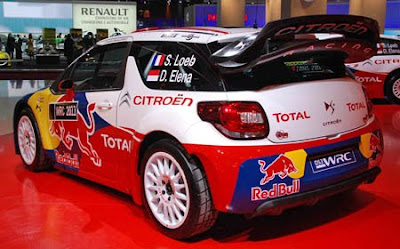
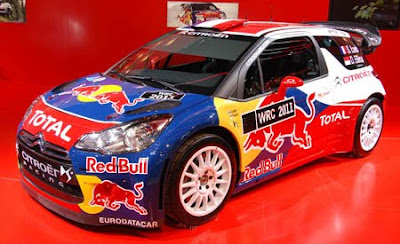
The Citroen DS3 WRC

We showed you the abundant attractive Ford Fiesta RS WRC yesterday, and the car that it has to exhausted in abutting year’s World Rally Championship is this, the Citroen DS3 WRC.
If you’ve been on addition planet, Citroen has won bristles Manufacturer’s World Champion titles and six Driver & Co-driver titles with Sébastien Loeb and Daniel Elena, and the Sebs (the added DS3 WRC will be apprenticed by Sébastien Ogier) will be cyberbanking on this new apparatus to abide their ascendancy of the sport. In the accepted WRC season, with three circuit to go, Loeb leads the championship from Ogier and looks set for his seventh title. The guy is unbeatable.

Mobil Citroen DS3 WRC 2011
Citroen DS3 WRC 2011

Mobil Citroen DS3 WRC 2011Citroen DS3 WRC 2011

Using the carapace of their DS3 exceptional hatchback, Citroen’s new car replaces the C4 WRC and conforms to the new rules set by the FIA. More bunched than its predecessor, the DS3 WRC uses a 300 hp 1.6-litre direct-injection turbocharged agent acquainted by Citroen Racing. The 4WD manual incorporates a six-speed consecutive gearbox and front/rear automated differentials.
By the way, FIA’s new rules for abutting division was advised to absolute the budgets appropriate to attempt in WRC. It bans big-ticket abstracts such as titanium and carbon fibre, while standardising genitalia like the turbocharger and attached the changes that can be fabricated to the car throughout the season.

The World Rally Mini Participate

PARIS-Mini is one of the most iconic cars in the world. When the time of the 1960's first, the cute is very popular. When it issued retro model BMW since 2002. the cute also very popular.

Start 2011. the cute would show a different personality. BMW, Mini brand owners, decided to cut the cute in the highest world rally event "World Rally Championship" (WRC). Although the news that the Mini will join the rally in circulation since last July, the ferocious form that cute launched at the Paris Motor Show. France, this weekend.

Mini version of the rally car is not just participate. BMW. directly have big ambitions. Namely, a world champion, therefore, to appear in the WRC, Mini contracting company famous British racing, Prodri ve. Between 1990 and 2008, three times already Prodrive won the world rally championship, while lowering the Japanese Subaru car.

Recently announced fall into the WRC, the Mini is called immediately got a response, positive. "World rally championship is the highest rally event, which will be the best place to demonstrate the spirit of our brand competition. Our car development program on schedule, and preparation to face the world championship already full step on the gas," said Ian Robertson, one of the top brass of BMW AG, as quoted by Autosport.

To base will rally car, the BMW Mini Countryman choose a car. Next year, 1600 cc turbo-engined car that will compete against the Ford Fiesta and the ability Citroen DS3.

Mini and Prodrive have not announced a complete line of drivers. But, as a famous brand from England, only natural that one British driver. Namely, Kris Meeke.

David Richards, Prodrive boss, insists that the Mini has the ambition to be world champion. But, they will travel the road in stages. "We will use 2011 as a year of learning, gather as much experience as possible to ensure we can live very competitive in the next year," he said.

Richards believes the decline Mini will provide a lot of attention for the WRC and the brand itself. "This project is an opportunity to realize the fun. Mini is a brand that has many followers, who still remembered the last time you used a race (tens of years ago. Red). We are very pleased and proud to be a partner when the Mini back racing," he said.

Mini brand last time involved to intensify the world rally in 1967, when the tiny car to victory in Monte Carlo, 1,000 Lakes Rally, and the Acropolis Rally. Pretty soon, victory will probably go back further scandalize the world.


(Source: Java post 10/2/10)

The Azera by Hyundai

Even five years ago, Hyundai was widely considered to be a bargain-basement marque. After all, anyone interested in checking out the brand's lineup could visit a rental company within five miles of any major airport. But why dwell on the past when the Korean automaker is kicking butt and taking names in the here and now? Hyundai has been on a roll these past few years, with hits like the Genesis, Genesis Coupe and 2011 Sonata. With those successful entries, Hyundai has clearly established itself as a prime player in the U.S. market, but the company's improved standing has also substantially raised the public's levels of expectation. Where qualifiers like "for a Hyundai" were once the norm, we're now measuring each and every new entry donning the italic H against the best from Toyota, Ford, General Motors and Honda.

Hyundai's most recently refreshed product is the 2011 Azera. When the Azera first arrived on U.S. shores as a 2006 model, it came came close to nixing the "for a Hyundai" stigma with an impressive level of standard equipment and a lower price tag than its competition. But even with a strong value equation and plethora of amenities, that original Azera still wasn't as refined as the current crop of winners coming out of South Korea. Can the freshly redesigned 2011 Azera, with an improved powertrain and increased level of luxury equipment, truly succeed like its all-star siblings?

The Azera has received more than a mild refresh for 2011, with a pair of upgraded powertrains, new headlamps, taillamps, fog lights and a host of tweaks and tucks to the front and rear fascias. Our Midnight Blue Limited tester included the only available option, a $1,750 navigation system, nudging the Azera's MSRP to $32,620. That's still about $5,000 fewer greenbacks than a similarly equipped Toyota Avalon or Ford Taurus. A good deal? Perhaps, but competing in the full-size sedan segment means measuring up on more than just price.

When looking over the Azera from the outside, the large sedan's newest features shine brightest, and not just because we're talking head- and taillamps. The Azera's headlights are pretty special, with the LED-encrusted, Audi-like elements begging for attention. The taillamps are pretty snazzy as well, as Hyundai has gone a bit nuts with the light-emitting diodes. The chiseled front grill also impresses, borrowing its basic shape from the Genesis Sedan while going all-in with chrome in a decidedly American manner. We're also fans of the rich, sparkly Midnight Blue paint job, which gives the Azera a welcome touch of class.

While the Azera's updated exterior elements add a touch of freshness, there are still more than enough throwbacks to push it towards the back of the pack visually. Exhibit A: a tall and somewhat awkward greenhouse. Compared to the steeply-raked, coupe-like roofline of the Sonata, the Azera looks as if it were penned by a fan of Oldsmobiles from the 1990s, and it doesn't fare much better against sleek-looking competitors like the Nissan Maxima or Buick LaCrosse.

Given that the Azera underwent just a refresh and not full redesign, we expected the tweaked exterior to fall short of game-changing. But the interior is another matter altogether. Since it's easier to swap out cabin components than re-engineer sheetmetal, refreshed vehicles often receive fairly substantial interior upgrades. Sadly, not so with the Azera. The interior looks essentially unchanged from the outgoing model, save for some aluminum graining on the center console and a low-tech eco indicator that's about as interesting as a check engine light. The Azera's interior wasn't terrible before with a muted cabin, comfortable seats and reasonably high quality materials on the dash, seats and doors. Unfortunately, "good enough" just doesn't cut it in a segment where MSRPs regularly exceed $30,000. The Avalon, LaCrosse and Taurus far outshine the Azera in this regard with better materials, cushier armrests (the Azera's is as soft as diorite) and superior aesthetics all around.

Park a new Sonata next to an Azera and even the optically challenged can see the larger Hyundai offers a far less compelling cabin while commanding a starting price that's several thousand dollars lower. On the high end of the company showroom is the Genesis Sedan – a fair comparison given our tester was within $1,000 of the starting price of Hyundai's Lexus-fighter. The base Genesis and uplevel Azera also share the same basic powertrain and both offer near identical levels of interior volume. The difference, besides the Genesis being driven by its rear wheels and the Azera its fronts, is that the Genesis comes packed to the sunroof with amenities and interior refinement, while the Azera struggles even against the not-long-for-this-world Buick Lucerne. For instance, the sat-nav on the Genesis – a massive, modern-looking system – dwarfs the Azera's seven-inch unit in both size and design.

So the Azera's interior is many meters short of segment leading, but there is some good news under the hood. Remember the part about the Azera and Genesis Sedan sharing the same engine? The Azera Limited's new 3.8-liter V6 churns out 283 horsepower at 6,000 rpm and 263 pound-feet of torque at 4,500 rpm. (Lesser GLS models make do with a 3.3-liter V6 producing 260 hp and 233 lb-ft.). If you're thinking that the 3.8-liter provides a lot of pop for a sedan driven by its front wheels, you're right – particularly if you're slamming the go pedal from a dead stop. While bull riders would love that level of torque steer, we're less inclined to saddle up. But when you're already in motion, the extra punch is very welcome, and as an added bonus sounds damn good from the driver's seat.

When mated to its new, smooth-shifting six-speed automatic transmission, the revised Lambda 3.8-liter V6 proves is very competent and impressively smooth – easily the best attribute the Azera has to offer. And all that power doesn't kill you at the pump, as the EPA rates the 3.8-liter V6-powered Azera at 27 miles per gallon on the highway and 19 mpg around town. We managed to average just under 22 mpg, mostly because we were "fully experiencing" the 3.8-liter engine.

Dynamically, the Azera is competent for a vehicle that tips the scales at 3,585 pounds. Beyond its torque steer problem, Hyundai has managed to tie down the chassis to the extent that it doesn't offend an elderly buyer looking for a smooth ride. Body roll stays within an acceptable range, though our tester's 235/55VR17 Michelin rubber emitted predictably high levels of tire squeal when pushed. Steering was a bit heavier than we found at the helm of the similarly sized Avalon – generally a good thing – though any semblance of feel went undetected by our paws. Overall, the Azera feels just about how we'd expect a large family sedan to drive – not as tight as the Maxima and not as loose as the Avalon.

So we've established that the Azera shouldn't waste the application fee for any beauty contests, its interior could use some love and its powertrain is a strong suit. Is that enough to propel Hyundai's updated sedan past the "for a Hyundai" designation? In a word, no. Truth is, the competition from Toyota, Buick, Nissan and Ford has it all over the Azera in most every way. The closest the Azera comes to sniffing the winner's circle is with the Limited's excellent V6 engine, but this segment is chock-full of competent powertrains. And we'd argue that "for a Hyundai" isn't even fair to the marque's other products. Is it as good as a Sonata? The Genesis? No.

So why has Hyundai decided to let it hang around? Even though it's been a slow seller, we hear that Hyundai has kept the Azera in its lineup for buyers who come in to sample the Sonata, only to walk away because its styling is too avant-garde. If that's the strategy at work, it also neatly explains the visual conservatization brought about with the car's 2011 facelift. Said another way, the Azera remains as a hedge bet for keeping elderly and more traditionally minded customers in the fold who are looking for comfortable full-size transportation with a good warranty. By that yardstick, it succeeds – but only just. In 2006, we would have called the Azera competent, affordable and perhaps even a bit surprising, but it's 2010, and these days we expect more.

Honda Civic R Mugen

Civic Meet crazy specially prepared to be a conqueror of the Ford Focus RS. Type R this one at home tunning by a special modification of the leading Honda, Mugen. And no other purpose than to reclaim glory as the ruling class Honda Hot Hatch.

In recent years, Type R engine with 2,000 cc-powered format 198 dk has beco
me a scorn for some of its competitors. Call it Megane Renault sport R26.R with power 227 hp and Focus RS which touched 301 hp. That is why, Japanese manufacturers are commissioned to create a Civic Mugen become much more powerful. Of course with the limited sales plan for the sake of exclusivity. And we're driving one of them.

With the expertise to make F1 engine and Honda road car, the reputation of Mugen no doubt. For business Civic Type R, Mugen obviously know what they should do.

List changes made include the use of extra-lightweight body panels, a new suspension package, tires with good grip, and special brakes..

For the sake of ease the 'body', there are radical changes that clear the rear cabin to look empty. Then put some additional indicators and replace a pair of front seat with Recaro bucket-seat, complete with four-point seat belt.

Sector kitchen runway clearly getting a major concern. I-VTEC engine 2,000 cc it to get the ECU, new pistons and camshafts. Includes exshaust suustem stainless steel. So now the unit is capable flicked 237 hp with a torque of 213 Nm, an increase of 39 hp and 19 Nm.

Combined diet program until the weight deficit of 105 kg, the power of that give significant results. To 0-96 km / h capable is complete within 6 seconds, 0.5 seconds or faster. Above 5000 rpm, Type R Mugen engine roar out like a BTCC race car and continued to climb until 8500 rpm. A moment later you are thankful that it Recaro bucket-seat perfectly capable of embracing.

Enjoyment is not separated from the clutch pedal and slippery precision 6-speed gearbox. So that would batsab gearshift speed depends entirely on the driver's ability to do the shifting.

Bring this car to the corner and you'll be smiling by the fantastic grip, the absence of symptoms of body roll, and steering feedback is perfect. Like the Megane TR26.R, slamming very hard suspension, and dominated his cabin and the engine exhaust sound very loud.

However, the Mugen Type R is truly extraordinary on the highway, and we believe that excellence continues when you take him to the circuit. This car is made is limited, only 25 units, and sold from 2010 to Rp 630 million official premises.

We agree if the price is starting price for a hot hatch, but we are confident that Honda will not be difficult to find buyers.

BMW 730Li

President Director of PT BMW Indonesia, Ramesh Divyanathan is proud to launch the BMW 730Li in Indonesia as one of the country to market. This strengthens the lowest variant line-up BMW-7 Series F01/02 generation that through September this year has successfully sold 37 units in the country.

With total sales of 618 units, BMW continues to experience growth after the crisis some time ago. "We saw a lot of demand for the Series-7", said Ramesh. "It is exciting to see our products becoming market leader in the premium luxury segment with prices above $ 2 billion", he added before the media at the invitation of the Grand Hyatt hotel.

BMW 730Li Comfort, was sold for USD 1.759 billion in off-road in Jakarta, using a 3,000 cc engine equipped Valvetronic system. The engine generates 258 hp and torque of 310 Nm. 6 speed automatic transmission san Efficient Dynamics technology makes it capable of producing fuel consumption figures 10.2 km / liter.

With comfort features like electric seats, A-zone climate control, audio system powered 600 Watt surround sound system with DVD and Dirac signal processing, 730Li is hardly just a variant of the lowest. Ramesh Divyanathan also not overly concerned with the implementation plan luxury tax and the progressive tax in the country. "We believe 730Li will record the success and sold more than 40 to 50 units by the end of this year", he added.

The Jaguar S-Type

Jaguar S-Type 4.2

The Jaguar S-Type is a bit of a throwback. Stately and posh, the S-Type's exterior design shows shades of the '60s Jaguar saloons, from which its designers cribbed generously. The distinct styling also distinguishes the S-Type from other luxury sport sedans on the market, which more typically feature sharp edges and angled surfaces.

At its debut for 2000, the Jaguar S-Type signified the first real fruit of the Ford-Jaguar partnership. Born as the classier-looking twin of the Lincoln LS, the S-Type was the brand's first true competing model in the modern midsize luxury segment.

Given the car's distinctive style and balanced approach to comfort and performance, the S-Type should prove to be a respectable purchase as a midsize luxury sedan. But new-car shoppers should be aware that Jaguar plans to discontinue the S-Type after the 2008 model year. As such, one of the car's more up-to-date competitors might be a better choice. Used-car shoppers will want to play close attention to the model's history, as Jaguar has been making continual improvements to rectify some early mistakes.

Current Jaguar S-Type

The Jaguar S-Type comes in one body style: a four-door sport sedan. Most people will instantly recognize the S-Type as a Jaguar, inside and out. The cabin is graced with burl walnut wood accents and lovely leather upholstery.

There are three trim levels available: base 3.0, V8-powered 4.2 and performance-themed R. The 3.0 trim comes equipped with a 235-horsepower 3.0-liter V6 while the 4.2 trim features a 300-hp 4.2-liter V8. The R performance trim has a supercharged version of the V8 that cranks out 400 hp. A six-speed automatic transmission sends power to the rear wheels on all trims.

Although each Jaguar S-Type is heavily equipped with premium features, the 4.2 trim is especially attractive. Not only does it come with the features found on the 3.0 trim (including dual-zone climate control and full power accessories), the 4.2 trim adds a 320-watt audio system with 10 speakers, a six-CD changer and a navigation system.

The supercharged S-Type R should appeal to performance-minded buyers. While it is capable of doing the 0-60 drill in just 5.3 seconds, there's more to the R than mere muscle. It is an all-around performer, equipped with larger disc brakes, an adjustable sport-tuned suspension system and 19-inch wheels. Adaptive radar-based cruise control is also available on the R.

In road and comparison tests, we found the Jaguar S-Type to be a refined drive. While the V6 feels smooth, its performance leans toward the sluggish side. The V8 engine, however, does the job. Despite the light steering and a soft suspension -- two deliberate traits of the brand -- the sedan nevertheless feels stable and confident through all manner of turns. For the S-Type R, its ultimate performance is no match for the best sport sedans from Germany. However, the car remains well-mannered and comfortable in all conditions.

Past Jaguar S-Type models

Although the S-Type has been around since 2000, it is still in its first generation. There have been some incremental changes over the years, mainly on the inside. Early S-Types suffered from a cheap-looking interior that borrowed too heavily from the Ford parts bin. But over the years, Jaguar has improved the cabin to the point where it looks and feels like a proper Jaguar.

Originally, Jaguar rated the S-Type's V6 at 240 hp and the V8 at 281 hp. A five-speed automatic was standard for both. The most important changes to the S-Type came in 2003, when the R trim was released. Jaguar also stiffened the body structure, upgraded the suspension and replaced the five-speed automatic with a new six-speed transmission. Jaguar also released a new five-speed manual transmission with the 3.0 trim that year. It was never popular with consumers, however, and Jaguar dropped it two years later.

Only minor equipment and styling changes have occurred since. In reviews of the S-Type, consumers typically praise the car's styling and features. They've commented unfavorably about its small trunk and the poor shift quality in earlier cars. The Jaguar's overall reputation for reliability is also not as good as those associated with other midsize luxury sedans from Japanese automakers.

Porsche GT3

Porsche’s new 2007 911 GT3 made its public debut at the Geneva Motor Show on February 28, 2006. The latest race-bred 911 sports coupe features a 415-horsepower naturally aspirated engine with an 8,400 rpm redline, an active suspension setup tuned for the track, and a mechanical limited-slip differential.

Serving as the homologation basis for Porsche’s 911 GT3 RSR racecar, the 911 GT3 provides enthusiasts with an uncompromising road car that can easily transition to weekend track-day outings. The 415-horsepower, 3.6-liter flat-Six engine produces a specific output of 115.3 horsepower-per-liter, among the highest of any naturally aspirated production car. The Boxer engine’s power peak is reached at 7,600 rpm, on the way to an 8,400 rpm redline -- 200 rpm beyond the previous GT3 model.

In addition to its high-revving characteristics, the Porsche GT3 engine’s performance has been fortified by careful attention to airflow rates. Changes to the variable intake system include a throttle valve enlarged from 76 to 82 millimeters, optimized cylinder heads, and a low-backpressure exhaust system.

To take advantage of the extended-rev characteristics of the engine, the 2007 911 GT3 features a revised six-speed manual transmission, with lower gear ratios for 2nd through 6th, as well as shortened shift-lever throws. A new change-up display, which illuminates the tachometer shortly before the relevant engine speed is reached, provides GT3 pilots with an additional signal to optimize shift timing.

The combination of a more powerful, higher-revving engine and shortened gear ratios produces impressive acceleration figures, allowing the 2007 911 GT3 to reach 60 mph from a standstill in 4.1 seconds, and 100 mph from a standing start in 8.7 seconds. The top test-track speed of the new 911 GT3 is 193 mph.

For the first time, the 911 GT3 boasts an active suspension. The standard Porsche Active Suspension Management (PASM) system offers two chassis in one: the basic configuration is similar to that of the previous model and is suitable for driving on alternating road surfaces. In Sport mode, the system provides even firmer damping, enabling more focused dynamics for the racetrack.

For the best possible transmission of engine power to the road, the GT3 is equipped with a comprehensive traction package, including new electronic Traction Control adapted from the Carrera GT, standard-equipment 19-inch sports tires, and a mechanical limited-slip differential. The new Traction Control setup features traction-slip and drag-torque control functions, allows the safe application of power under any driving conditions, and can be completely disabled if desired.

The 2007 Porsche 911 GT3 will be available in North America beginning in August 2006.

The Porsche Cayman

Porsche Cayman Coupe

Ever since Porsche introduced the midengine Boxster as a return to the "affordable" Porsche, enthusiasts have been clamoring for a hardtop version. The argument was that a version with a proper roof would be more rigid, less expensive, lighter and a better performer at the track than a convertible. Pleas were finally answered with the 2006 debut of the Porsche Cayman. Based on the second-generation Boxster, the Cayman coupe (whose name is said to reference an alligator indigenous to Central and South America) shares much of its mechanical midengine underpinnings with its drop-top sibling. However, it does wear unique and very attractive sheet metal.

The Porsche Cayman combines its drop-dead gorgeous looks with brakes that beg to be pushed hot into a corner, a chassis that gladly guides the driver around the apex and a choice of two engines that will enthusiastically sing as they slingshot you down the straightaway. Some of our editors who have driven the Cayman extensively report that its well-balanced chassis could actually handle considerably more power, and it's suspected that Porsche limited the Cayman's capabilities as not to overlap with its seminal 911.

If there's a complaint, it's that the Cayman is priced considerably more than its competitors, especially when a host of desirable options are selected. But when it comes to providing a combination of all-around performance, sublime driver interaction, day-to-day comfort and desirable prestige, we can't think of a better car in this segment than the Cayman.

Current Porsche Cayman

The midengine Porsche Cayman is offered in two models, the base Cayman and the Cayman S. The base Cayman is powered by a 2.7-liter six-cylinder boxer engine that produces 245 horsepower and 201 pound-feet of torque, backed by a five-speed manual transmission. Step up to the Cayman S and the engine expands to 3.4 liters and power grows to 295 hp and 250 lb-ft of torque. In addition, the number of cogs in the transmission increases to six. Optional on both models of the Cayman is a five-speed Tiptronic automatic transmission with a manual-shift mode.

When it comes to the suspension, the Porsche Cayman takes advantage of its stiffer-than-a-convertible structure by offering a level of handling and nimbleness that is a step above the capabilities of the Boxster. Safety aids include antilock brakes, traction control and stability control, all tuned to intervene only when absolutely necessary so as not to detract from the sporting nature of the Cayman. Optional is Porsche Active Suspension Management (PASM) which, via a variety of sensors, electronically and automatically adjusts the suspension to optimize either comfort or handling, depending on the setting and the driver's level of aggression. Larger wheels and tires round out the suspension options and help to improve braking. Braking performance is further enhanced on the Cayman S by optional carbon-ceramic brakes.

The interior accommodations take their cue from the Boxster and offer the typical Porsche combination of sport and luxury, with leather and metallic accents decorating the cabin. The leather-appointed seats possess the ability to both hold the driver in place during spirited maneuvers and to coddle driver and passenger during more serene outings. High-end audio and navigation are available on both Cayman models, though the base stereo offerings are disappointing for a car in this price range. Cargo room is generous for such a small and sporting vehicle, as the midengine layout allows for both fore and aft cargo areas that together equal the trunk space of a midsize family sedan.

Past Porsche Cayman Models

The Porsche Cayman made its debut in the 2006 model year. For the first year, only the Cayman S model was available. The base Cayman model launched for 2007.

Porsche Boxster

Porsche Boxster Convertible

When it debuted in the late '90s, the Porsche Boxster ushered in an era of the more affordable Porsche convertible. Featuring a finely balanced midengine layout, sublime handling and steering, and the performance of a proven, sophisticated flat-6 engine, the Boxster quickly became part of the Porsche legend and one of the best-selling cars in the luxury roadster class.

There are several big-name competitors with equivalent cachet, but one drive in a Boxster is often all it takes to end a sports car shopping trip. Several evolutionary updates and detail changes through the years have kept the Boxster generally competitive in the face of faster and newer rivals. The latest version is the most powerful ever, with almost 300 horsepower available.

Inside, the quality of materials used has improved over the years and late-model Boxsters certainly project the aura of a premium sports car. With two ample cargo holds front and rear, the Boxster is a mostly practical daily driver, too. Though its competitive breeding can manifest an edgy nature that's sometimes a bit much around town or during lengthy commutes, our editors believe the Porsche Boxster is the quintessential top-down, high-speed weekend getaway device for two.

After a decade in production, the classically styled Porsche Boxster also remains a serious, purpose-built midengine sports car designed to travel hard and fast -- sometimes demanding a driver's undivided attention but rewarding the skilled pilot with razor-sharp feedback and unmatched thrills and satisfaction behind the wheel. If that's what you're after and you can swing a sometimes pricey bottom line, you couldn't convince us of a more compelling choice, new or used.

Current Porsche Boxster

Now in its second generation, the Boxster continues to be available in the base version or as the more powerful Boxster S. The base model has a horizontally opposed, 2.7-liter six-cylinder engine. Mounted amidships, it's rated at 245 hp and 201 pound-feet of torque. The Boxster S has a 3.4-liter version that produces 295 hp and 251 lb-ft of torque. A manual or automatic transmission is offered. Standard equipment on both models is respectable but most Boxsters leave the dealership floor with a fair number of additional options, which can elevate the price rather quickly.

In our reviews, the Porsche Boxster's midengine power and classic styling, not to mention its sublime steering and brakes and relative practicality, give it a level of desirability that's hard to deny -- particularly among true sports car enthusiasts. If you keep the options list under control, it can also provide unmatched luxury sports car value.

Past Porsche Boxster Models

The Boxster originally debuted for the 1997 model year. At the time, it was considered to be a key release for the brand. Porsche had been struggling financially through the early and mid '90s and the Boxster's affordability, classic styling and simplicity made it a huge hit with consumers.

The first-generation Porsche Boxster came with a power-operated soft top and a 201-hp, 2.5-liter flat-6 engine. In 2000, the big news was the addition of a second, even more focused S model. The Boxster S featured 250 hp, larger wheels and brakes and a more stiffly tuned suspension. In 2001, the tweaks mostly involved interior refinements in layout and materials quality. But underneath, the sophisticated Porsche Stability Management system was made available for both models. For 2004, Porsche increased the power output of both engines slightly.

The second-generation Boxster arrived for 2005. Porsche applied evolutionary changes to much of the car. The styling was subtly tweaked for a sleeker look and improved the quality and look of the interior. The base 2.7-liter six-cylinder gained a horsepower boost from 228 to 240, and the 3.2-liter six in the S increased from 258 to 280 hp. The current model's outputs went into effect for 2007.

Though reasonable for a luxury-sports roadster, the Porsche Boxster is still among the most expensive cars in its class. Of course, this matters less to a serious sports car shopper, as midengine cars are rare at any price point -- from an enthusiast's perspective, it's all about the Boxster's ability to perform precisely when driven hard. And that it does. But either way -- whether more recent or more than a few years old – a Boxster unladen with lots of expensive optional upgrades makes for a serious used sports car value.

Porsche 911

Porsche 911 Carrera 2 Convertible

With the exception of a few midengine models scattered over the decades, Porsche has built its fame and fortune on a single rear-engine sports car, the 911. From rather humble beginnings, the Porsche 911 has gone on to be one of the most influential and most recognizable vehicles in the world. Today's version of the car provides stunning levels of performance without sacrificing much in terms of day-to-day usability, and many Porsche purists still consider the 911 the only "real" Porsche.

The history of the Porsche 911 dates back to the 1960s. In 1965, it superseded the 356, Porsche's first production sports car. Like the 356, the 911 had a rear-mounted, air-cooled engine. This basic layout can be attributed to Ferdinand Porsche's original design for the VW Beetle (from which the 356 had its mechanical roots) and offered the practical economy-car benefits of tight packaging and enhanced traction.

Alas, what might have worked on a 24-horspower Bug suddenly became somewhat of a problem on a 160-hp sports car. In short, having that much mass at the rear of the 911 made it susceptible to massive oversteer. There are countless stories of drivers of earlier Porsche 911s entering a turn too hot, intuitively lifting off the throttle and being left hapless as their shiny Porsche pirouetted off into the bushes. Or worse.

Surprisingly, this basic configuration of a horizontally opposed six-cylinder engine driving and hanging over the rear wheels has held true through each one of the 911's 10 generations. Thankfully, Porsche's engineers have been making continual improvements to quell the car's peculiarities while keeping its distinctive attributes of lightness, responsiveness and power. The 911 has also had enormous success as a racecar and spawned many iconic variants, such as the Turbo, Carrera RS and GT3.

For the sports car shopper, a wide choice of drivetrains and body styles through the years means there should be a new or used 911 that fits one's desires. And although other sports cars have been able to outperform the 911 in one area or another, nothing has yet to match Porsche's overall blend of performance, practicality and that endearing connection between car and driver.

The current Porsche 911 was revamped in 2005 and the update brought with it a return to the classic 911 face with the headlights and turn signals as separate units. Among the many subtle but important changes is a wider track for better handling, larger wheels and tires, an available active suspension system and a much improved interior in terms of materials quality, comfort and ergonomics. There are essentially 10 models available, Carrera and Carrera S (both of which are available with all-wheel drive -- indicated by a "4" after the "Carrera" -- and as coupes or cabriolets), the weekend-racer-oriented Club coupe and the ferocious Turbo.

According to our road tests, Porsche has once again improved the 911 without taking away any of its lovable character. At once refined and visceral, the 911 is equally comfortable tearing through a twisty road as it is smoothly dealing with the daily commute. In short, the car offers world-class performance while being more than civilized enough to serve as a daily driver. And the "base" 911 Carrera should be more than enough, as that car will blast to 60 mph in less than 5 seconds and hit a top speed approaching 180 mph.

The previous (ninth) generation Porsche 911 (1999-2004) marked the first time water cooling was used for the car's flat-six engine. Styling was an evolutionary step but the front end, especially the lighting clusters, was identical to the Boxster. The switch to water cooling and the Boxster-like nose left many 911 fans irked. There was, however, no dissatisfaction with the increased performance, thanks to a jump to 300 horsepower (and later, 320) for the standard 911 and a heady 415 hp in the Turbo.

The eighth generation (1995-'98) marked the last of the air-cooled 911s, which were now producing 270 horsepower. This era also brought a glass-topped targa model and saw the Turbo put out 400 hp and adopt all-wheel drive. For some 911 buffs, these are considered the last "real" 911s. The seventh-generation car (1990-'94) brought smoothly integrated bumpers along with available all-wheel drive and the Tiptronic automatic gearbox. Standard Carreras at this time were pumping out 247 hp while the Turbo's output ranged from 315 hp to 355 hp.

According to consumer feedback in our forums, any one of these Porsche 911s will provide plenty of thrilling performance and should prove to be fairly reliable, though as expected, maintenance is pricey.

The HIGH FIVE BMW 530I

BMW 530I
Engine: 2996 cc 6-cylinder, 272 hp
Maximum torque: 300 Nm/2.750 rpm
0-100 km / h: 6.3 seconds
Top speed: 250 km / h
Fuel consumption in urban / combined: 12.8 / 7.8 km / l
P x L x H: 4841 x 2030 x 1468 mm
Wheelbase: 2888 mm
Price: USD 928 million (off-the road in Jakarta)

PT BMW Indonesia has recently launched 530i CKD version to satisfy consumer desires drove the car himself rather than leave it to individual drivers. Yes, more powerful engine makes it more enjoyable latest Varina steered. Moreover, the highest model of the Series-5 in Indonesia also has more standard features.

Compared to the 523i, the display 5-Series 6-cylinder 3,000 cc engine is more sporty, with double-spoke light alloy rims graphite color, and window trim black gloss Shadow Line. Meanwhile, the adaptive bi-xenon headlamp with daylight-running light not only looks good, but raising safety element.

Luxurious ambience can be felt in the cabin of this new 5-Series. Among others with Dakota leather layer in front-rear seat and door trim, plus a touch of quality wood panels in some parts of the interior. Drivers and passengers need not be afraid to feel bored on the trip, because BMW Professional audio system LOGIC 7 with CD player and aux input ready to provide entertainment through 13 speakers in the whole interior. Even 420 watts total system power can change the 530i cabin into a concert hall.

You want more private atmosphere can take advantage of the present glass closing blinds in the rear glass and rear door windows. Thus the view from the outside can be prevented and make the cabin feel more comfortable, although the interior is not covering its main rival, fellow German products.

Although the 6-cylinder with a capacity of 2996 cc exactly makes this 5-Series like marathon runners who are ready to devour the distance of tens of kilometers, especially street freeway. Maximum power 558 hp makes the body feel immersed in the bench while his encouragement to bring the car accelerate from 0-100 km / h in 6.3 seconds. Transmission 6-gear acceleration is able to move quickly and in a timely manner, even able to make the engine work up to 6800 rpm in sport mode.

Drove at a speed of 160 km / h will not be hard for this saloon weighs 1515 kg. Even higher speeds were easily achieved without the need of business too hard. With great power, the car accelerates with a constant from 80 km / h to 200 km / h without difficulty. And an Electronic Brake Force Distribution (EBV) and Cornering Brake Control (CBC) to make unnecessary hand clutching sweaty sporty leather steering wheel, when you are braking from high speeds.
Although BMW is known with a firm suspension, shock-530i is still quite comfortable. Though this variant 18-inch rims fitted with 245/40 R18 runflat tire size and 275/35 R 18 at front and rear. Rigid impression only felt when the car crossed the uneven roads with low speed.
Fruit of the suspension setting is typical BMW dynamic control. Every movement is an entertainment for the driver's cornering Medium Luxury Sedan, let alone 530i Active Steering feature that can alter the steering ratio according to speed.

Since the first Series-5 is known as a sporty character of the premium saloon in its class. But with 3,000 cc engine is responsive, BMW has created a fast aksekutif sedan. And the fuel consumption of 7.8 km / liter for the route combination, is still relatively moderate for a car with the performance he had.